

India's New Space Race: How Private Startups Are Redefining the Global Space Landscape
Private Startups in India: Leading a New Era in Space Exploration
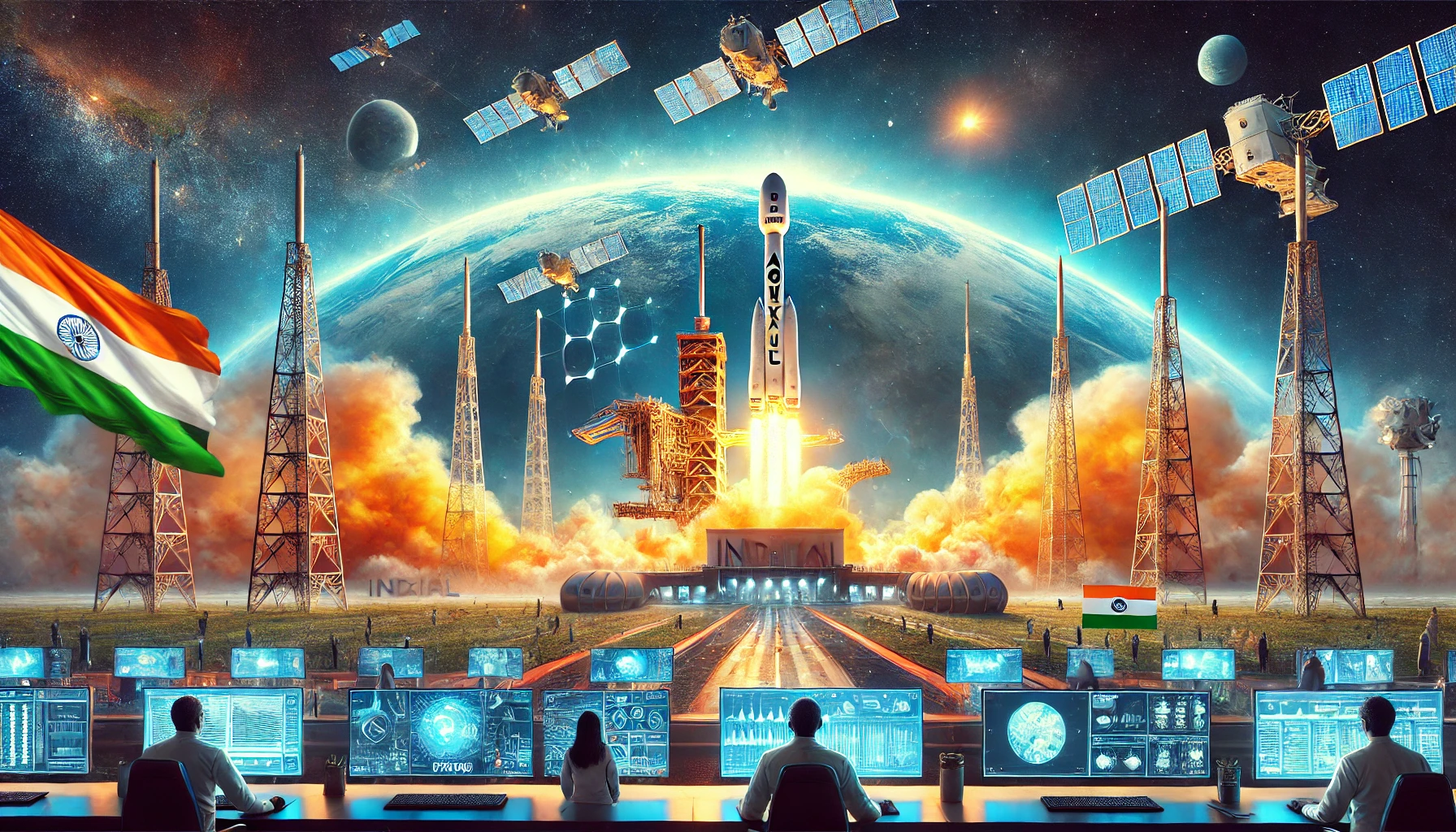
India’s space journey is entering a transformative era. For decades, the Indian Space Research Organisation (ISRO) was synonymous with the nation's space prowess, consistently delivering cost-effective missions that won global admiration. Today, however, the narrative is evolving as private startups are joining the race, spurred on by groundbreaking government reforms, significant funding initiatives, and an entrepreneurial spirit that is set to revolutionize the global space economy.
This blog delves deep into the multi-layered story of India’s emerging private space sector, its technological innovations, regulatory breakthroughs, economic implications, and the challenges and opportunities that lie ahead.
1. A Brief History: From ISRO’s Pioneering Days to a Dynamic Ecosystem
ISRO’s Legacy
Since its establishment in 1969, ISRO has achieved remarkable milestones—from launching the first Indian satellite (Aryabhata) to executing missions like Chandrayaan, Mangalyaan, and the historic Chandrayaan-3 lunar landing. ISRO’s cost-effective methods have not only brought global recognition but also laid the foundation for a self-reliant space program. Despite its successes, the sheer scale of demand in modern space applications has necessitated a broader participation model.
The Need for a Paradigm Shift
While ISRO focused primarily on research and development as well as complex missions, the growing global market—now driven by small satellites, reusable rockets, and data analytics—highlighted a gap. International trends, such as those set by SpaceX and Blue Origin, underscored the need for agility, rapid innovation, and cost-effective solutions. This gap paved the way for private companies to step up and participate actively in every segment of the space value chain.
:contentReference[oaicite:0]{index=0}
2. Government Reforms: Laying the Regulatory and Financial Foundation
Opening the Sector to Private Participation
A series of bold policy reforms over the last few years has catalyzed this private sector surge. Key initiatives include:
- Establishment of IN-SPACe: The Indian National Space Promotion and Authorization Centre now acts as a single-window agency, facilitating private firms’ access to ISRO’s state-of-the-art facilities, technical expertise, and data resources. This agency not only authorizes private space activities but also issues guidelines ensuring a level playing field.
- NewSpace India Limited (NSIL): Created to commercialize space assets and launch services, NSIL allows ISRO to focus on R&D while private companies take charge of end-to-end commercial operations.
- Legislative Reforms: The evolving Space Activities Bill and updated Indian Space Policy 2023 provide clarity on liability, technology transfer, and foreign direct investment, ensuring a stable, predictable regulatory framework.
These reforms have shifted the model from a “supply-based” system—where ISRO was the primary actor—to a “demand-driven” ecosystem where private enterprises can innovate and compete in both domestic and global markets.
:contentReference[oaicite:1]{index=1}
Financial and Venture Capital Support
Recognizing the high-risk, long-horizon nature of space technology, the government has taken proactive measures to bridge the funding gap:
- VC Funds: A 10-billion rupee ($119 million) venture capital fund and a separate Technology Adoption Fund (valued at around 5 billion rupees or $57 million) have been approved to support startups at various growth stages.
- Long-Term Economic Vision: The government aims to boost India's share in the global space market from the current 2% (approximately $8 billion) to an ambitious $44 billion by 2033.
These financial initiatives are designed not only to attract domestic capital but also to lure foreign investments, positioning India as a global competitor in the commercial space industry.
:contentReference[oaicite:2]{index=2}
:contentReference[oaicite:3]{index=3}
3. Technological Innovations: The Power of Disruption
Launch Vehicle Breakthroughs
Private startups are reimagining the way rockets are designed and launched:
Skyroot Aerospace:
- Vikram Series: Skyroot’s Vikram-S suborbital launch in November 2022 marked the first successful private rocket launch in India. The startup is developing a series of rockets (Vikram-I, II, and III) that leverage cutting-edge technologies like carbon composite structures and 3D-printed components to ensure rapid assembly and cost efficiency.
- ISRO Collaborations: Strategic agreements allow Skyroot to utilize ISRO’s facilities for testing, ensuring that the technology meets rigorous safety and performance standards.
:contentReference[oaicite:4]{index=4}
Agnikul Cosmos:
- Agnibaan Rocket: Born from the innovative ecosystem at IIT Madras, Agnikul Cosmos is developing the Agnibaan launch vehicle. Its flagship engine, Agnilet, is the first 3D-printed, single-piece rocket engine in India, significantly reducing production time and costs.
- Private Launchpad: Agnikul has set up India’s first private launchpad at Sriharikota, ensuring they can independently conduct tests and future launches.
:contentReference[oaicite:5]{index=5}
Advanced Satellite Technologies
The revolution isn’t limited to rockets—satellite technology is also undergoing a major transformation:
Pixxel:
- Hyperspectral Imaging: Unlike conventional imaging satellites, Pixxel’s hyperspectral satellites capture data across hundreds of light wavelengths, enabling unparalleled insights for applications in agriculture, mining, environmental monitoring, and defense.
- Global Constellation: With plans to launch a constellation that provides global coverage every 24 hours, Pixxel is poised to tap into a market projected to reach $19 billion by 2029. Its technology enables high-resolution analysis, unlocking data-driven decision making on a massive scale.
:contentReference[oaicite:6]{index=6}
Additional Innovators:
Startups like Dhruva Space, Bellatrix Aerospace, and GalaxEye are also making significant contributions—ranging from developing propulsion systems and small satellites to offering innovative Earth observation and data analytics services.
4. Economic Implications: Growth, Job Creation, and Global Competitiveness
Expanding the Space Economy
India’s ambitions are not limited to technological advancements:
- Market Projections: The government targets an increase in the space sector’s revenue from approximately $8 billion today to $44 billion by 2033. This shift could help India capture a larger share of the projected global space economy, estimated at over $1 trillion by 2040.
Export Potential: With an increasing number of startups securing international contracts (Pixxel, for instance, has signed agreements with global clients and even NASA), India is set to become a major exporter of space technologies and data services.
:contentReference[oaicite:7]{index=7}
Job Creation and Economic Multiplier Effect
The ripple effects of this transformation are expected to be enormous:
- Direct Employment: High-skill jobs in aerospace engineering, software development, data analytics, and manufacturing are projected to increase dramatically.
Indirect Benefits: The growth of ancillary industries such as logistics, consulting, and supply chain management will further boost the economy. Studies indicate that every dollar earned by the space industry generates a multiplier effect, stimulating broader economic growth.
:contentReference[oaicite:8]{index=8}
Global Competitiveness and Strategic Advantages
- Cost Efficiency: Indian startups are renowned for their cost-effective solutions. ISRO’s legacy of low-cost space missions continues to be a significant competitive advantage in the private sector.
- Innovation Ecosystem: India’s large pool of engineering talent and its rising proficiency in data science, machine learning, and AI position it uniquely to offer comprehensive space-based services—from satellite launches to advanced Earth observation analytics.
Public-Private Synergy: By leveraging ISRO’s decades-long expertise and coupling it with the agility of startups, India is creating a hybrid model that is both innovative and reliable. This model is expected to challenge established players like SpaceX, Rocket Lab, and Chinese space firms.
:contentReference[oaicite:9]{index=9}
5. Challenges and Opportunities: Navigating the Complex Landscape
Regulatory and Policy Hurdles
Despite the progress, several challenges remain:
- Bureaucratic Bottlenecks: Even with IN-SPACe streamlining procedures, navigating India’s regulatory landscape can be daunting for startups. Continuous refinement of policies and faster approval processes are critical.
- Technology Transfer and Intellectual Property: Ensuring smooth technology transfer from public research bodies to private firms without compromising national security remains a key challenge.
Balancing Public and Private Roles: Avoiding the over-dominance of ISRO’s legacy systems while fostering a competitive environment for private enterprises is essential for long-term growth.
:contentReference[oaicite:10]{index=10}
Funding Cycles and Market Fluctuations
- Investment Volatility: Although private investments in India’s space sector have soared in recent years, funding can be cyclical. A notable 55% drop in funding in 2024 highlights the need for stable, long-term capital inflows.
Venture Capital and Government Support: Continued support through government-backed VC funds and private equity is crucial to sustain momentum and ensure that innovative ideas can transition into commercial realities.
:contentReference[oaicite:11]{index=11}
International Competition and Strategic Positioning
- Global Rivalry: With established players in the United States, China, and Europe aggressively expanding their space capabilities, Indian startups must continuously innovate and scale their operations.
Strategic Partnerships: To overcome these challenges, India is seeking international collaborations and forging partnerships that could provide not only technical expertise but also open new markets for Indian innovations.
:contentReference[oaicite:12]{index=12}
6. The Road Ahead: A Vision for a Self-Reliant, Global Space Superpower
India’s long-term vision is anchored in the principles of Atmanirbhar Bharat (self-reliance). The roadmap for the coming decades includes:
- Human Spaceflight and Deep Space Missions: Plans for crewed missions, lunar bases, and even missions to Venus highlight the ambitious goals of ISRO and the private sector alike.
- Scaling Up Launch Capabilities: With the technology for small satellite launch vehicles (SSLV) already under development and a focus on cost-effective, rapid-turnaround launches, India is positioning itself as a preferred launch destination for global clients.
- Expanding Downstream Applications: Beyond launch services, the true economic value lies in data applications—from precision agriculture and resource monitoring to defense and climate analytics. Companies like Pixxel and SatSure are spearheading these efforts.
- Creating a Vibrant Ecosystem: By fostering public-private partnerships, enhancing regulatory clarity, and ensuring a steady flow of venture capital, India is on track to become a global hub for space innovation.
The synergy between ISRO’s historical achievements and the disruptive potential of private startups could propel India into a leadership role in the global space economy—a role that transcends national pride and contributes significantly to global technological progress.
Conclusion
India’s space sector is at a critical juncture. The legacy of ISRO, combined with the dynamism of emerging private enterprises, is creating a fertile ground for innovation and economic growth. With comprehensive government reforms, strategic financial backing, and a clear vision for self-reliance, India is poised to not only enhance its domestic capabilities but also to assert its presence on the global stage. As the country works towards a $44 billion space economy, the journey ahead is challenging yet filled with immense opportunity. In this new era, every launch, every satellite, and every breakthrough in space technology brings India one step closer to becoming a true global space superpower.
What are your thoughts on India’s evolving space landscape? Share your comments below and join the conversation!